16 October 2026
A recent consultation on the Syon Lane to Hounslow walking and cycling improvements scheme includes a recommendation to convert 18 existing bus stops to bus stop bypasses. This has once again highlighted the need for a rethink on the use of bus stop bypasses, and floating bus stops more generally.
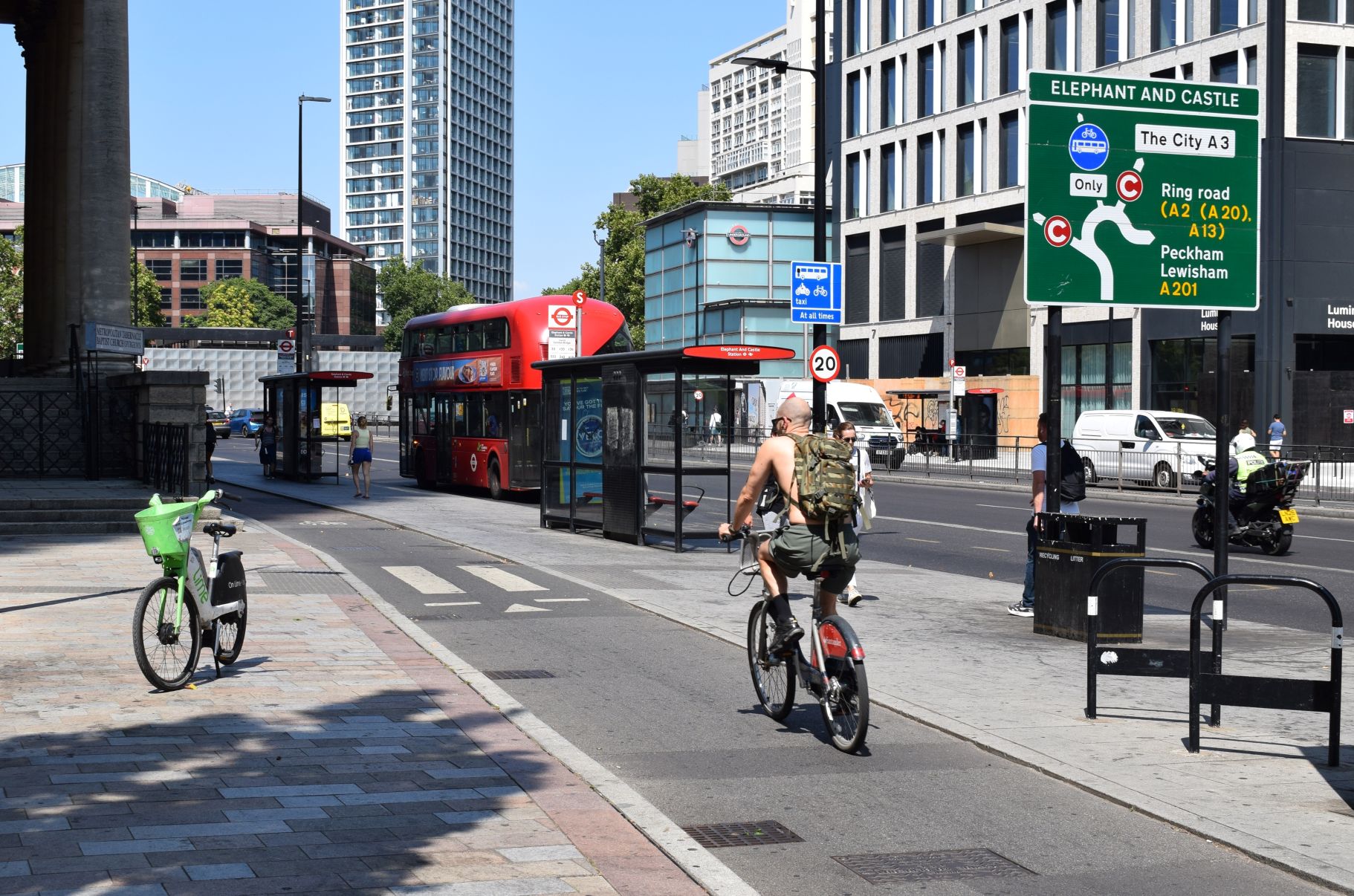
There are over 19,000 Transport for London (TfL) bus stops across London. At some of these locations, so-called floating bus stops have been introduced to improve safety for cyclists, by removing the need for them to pull out into traffic when overtaking a stopped bus.
Two types of floating bus stop can be found in London:
Bus stop bypasses (BSBs)
This is where a cycle lane runs between the pavement and an island with a bus shelter where passengers board the bus
Shared use bus boarders (SUBBs)
This is where the cycle lane runs through the passenger boarding area between the bus shelter and the kerb.
BSBs have been introduced at 164 locations, according to figures provided by the Mayor of London in 2024, split roughly evenly between TfL-managed roads and borough-managed roads. There are no SUBBs on TfL-managed roads, though an unquantified number of SUBBs have been introduced on roads managed by boroughs such as Camden, Waltham Forest and Kingston.
Floating bus stops have been heavily criticised on safety grounds by some disability groups, particularly those representing passengers with impaired sight and/or hearing who may not see or hear approaching cyclists. Pro-cycling campaigners counter that floating bus stops appear to have low collision rates and that there is limited evidence that disabled or elderly people are avoiding using such stops.
Against this context, in recent years:
- TfL initially published a Bus Stop Bypass Safety Review in May 2024 but this has since been withdrawn twice due to errors in data used in the report. A revised version of the report has yet to be published
- The Department for Transport (DfT) published statutory guidance on BSBs in January 2026, with a second version to be released next year. TfL has commissioned a Bus Stop Bypass Design Enhancement Review, which is due to complete in 2027 and will feed into the revised DfT guidance
- TfL has updated or is in the process of updating previously non-compliant BSBs on TfL-managed roads, and is supporting London boroughs with technical and financial help to address non-compliant BSBs on their roads
- TfL has pursued other initiatives, such as education and information campaigns (for example, on giving way to pedestrians at zebra crossings) and trialling ideas like sensor-activated signs at BSBs to highlight to cyclists that they should slow down
- DfT asked councils in 2025 to pause the implementation of SUBBs.
In addressing the needs of different transport users, there is a need to recognise that this issue relates to a relatively small proportion of all London bus stops currently, and the number of recorded collisions between cyclists and pedestrian is much smaller than collisions where cyclists are hit by vehicles. But in trying to improve safety for one set of users, these initiatives have increased risk (and, importantly, the perception of risk) for another set of users with fewer transport choices.
We don’t think the balance is right and call for:
- compulsory and immediate removal of all existing SUBBs in London, rather than just a pause on their use
- greater action to promote significantly increased levels of Highway Code compliance by cyclists at zebra crossings serving BSBs, ranging from innovation in BSB design to greater enforcement activity focusing on the worst locations
- a pause on rolling out any further BSBs by TfL and boroughs until there is clear evidence of significantly improved Highway Code compliance by cyclists at zebra crossings serving existing BSBs
- reconciliation of the apparent contradiction between DfT statutory guidance and British Standards Institution (BSI) guidance on what constitutes safe BSB design, in time for the release of the next version of DfT guidance due next year
- acceleration by TfL and boroughs of work to ensure that remaining non-compliant BSBs are brought in line with the latest official design standards.